History
Learning About Thomas Jefferson
The Jefferson I Thought I Knew
Before this trip — my Northeast trip in the summer of 2026 — I knew Thomas Jefferson one way: the man who led America toward equality and freedom, because he wrote that all men are created equal. I completely believed in that public figure — and I thought of him as only a political person.
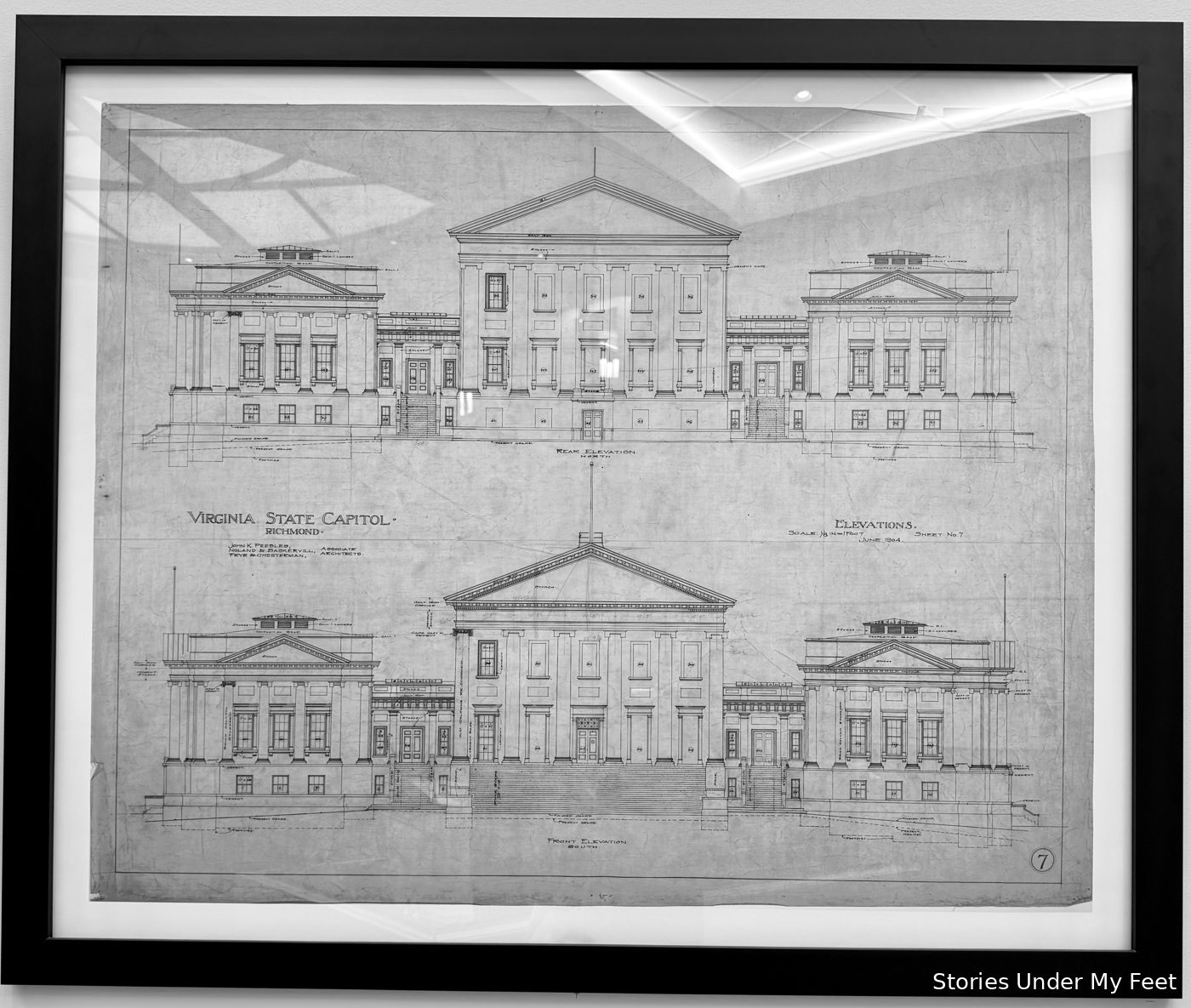
I Doubted He Designed the Architecture
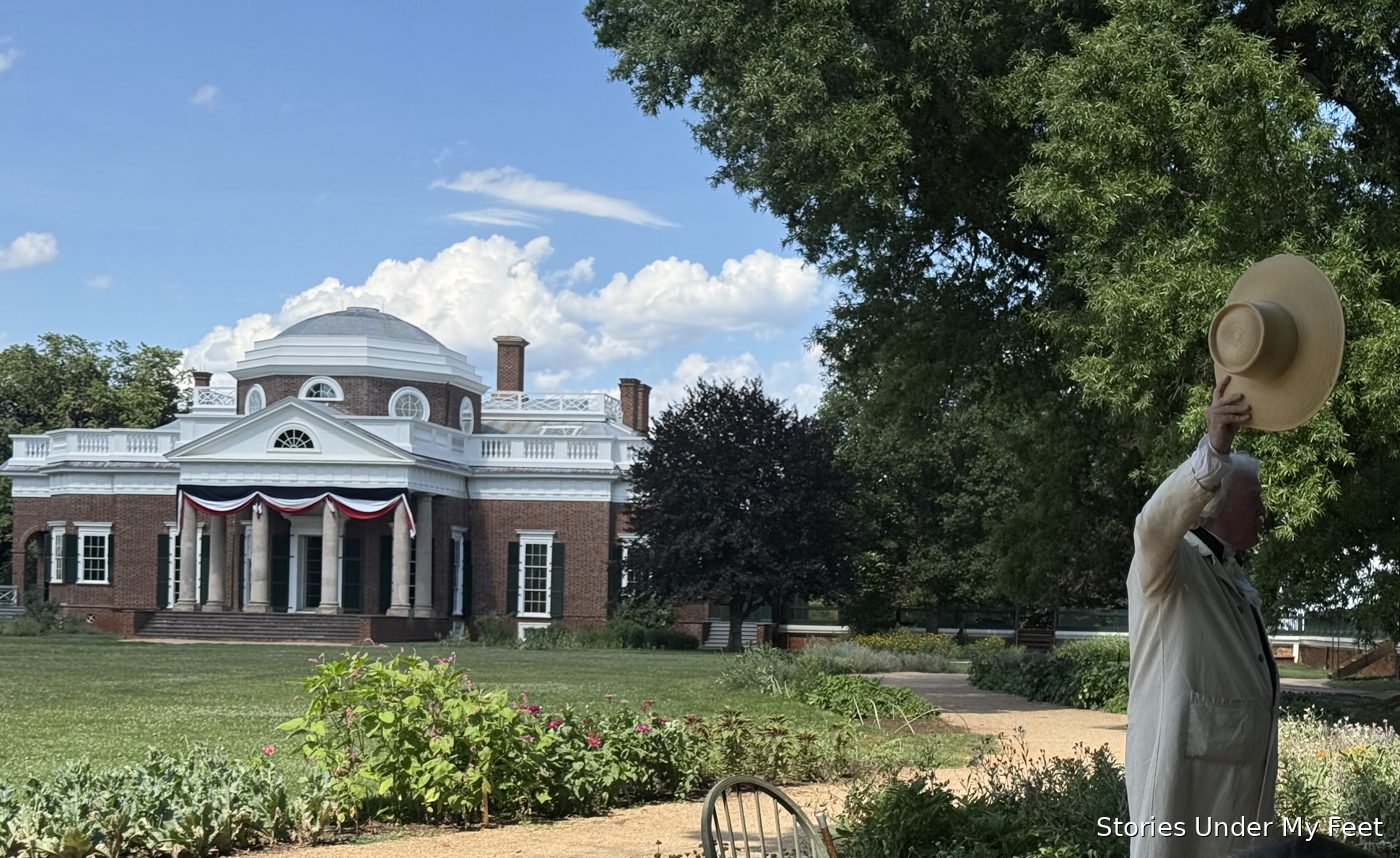
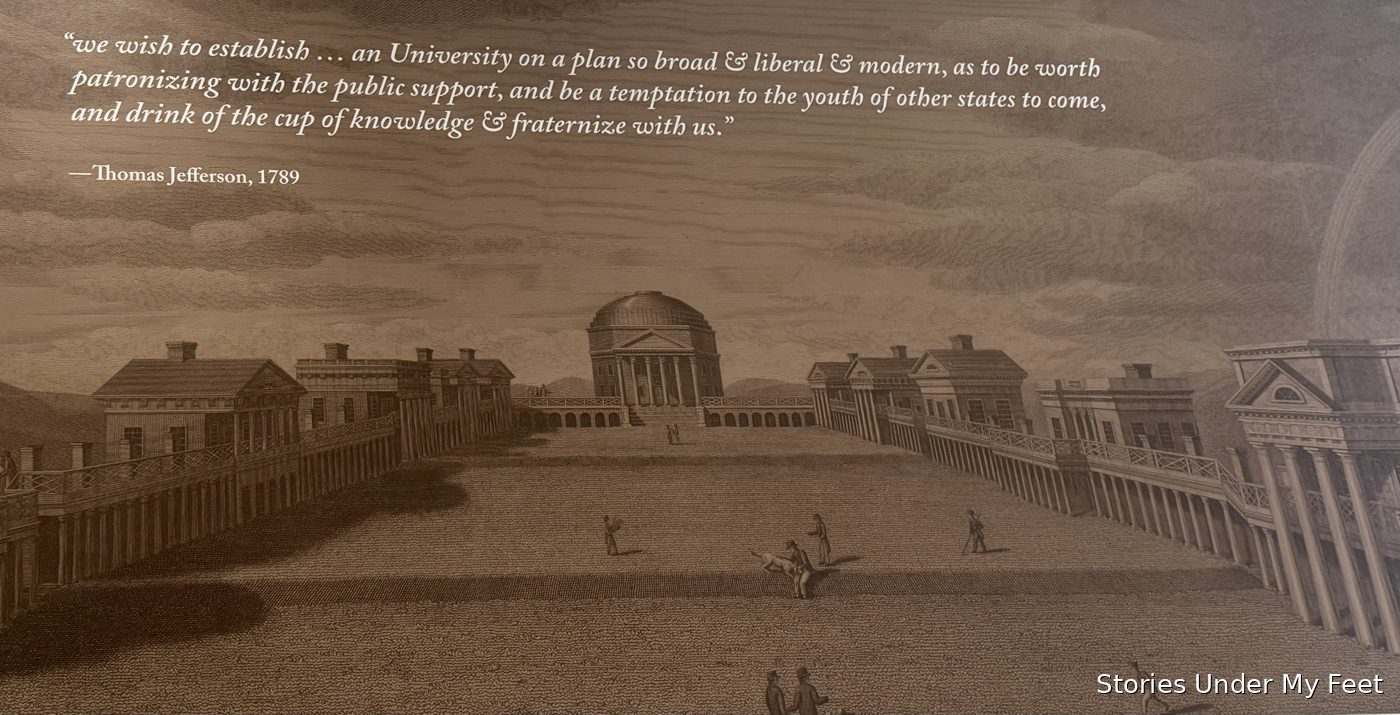
So the architecture caught me off guard. On this trip I stood inside the Rotunda at the University of Virginia, walked through Monticello, and learned about the Virginia State Capitol in Richmond — all designed by him, and all of them beautiful. Honestly, I doubted him at first. I suspected he was rich and powerful enough to hire someone to design them and just put his name on the work. But then I saw the evidence with my own eyes: his blueprints, his obsessively detailed drawings, even a road map where he recorded the mileage between every landmark from Monticello to the President's House. No one fakes that level of detail. He really designed them himself.
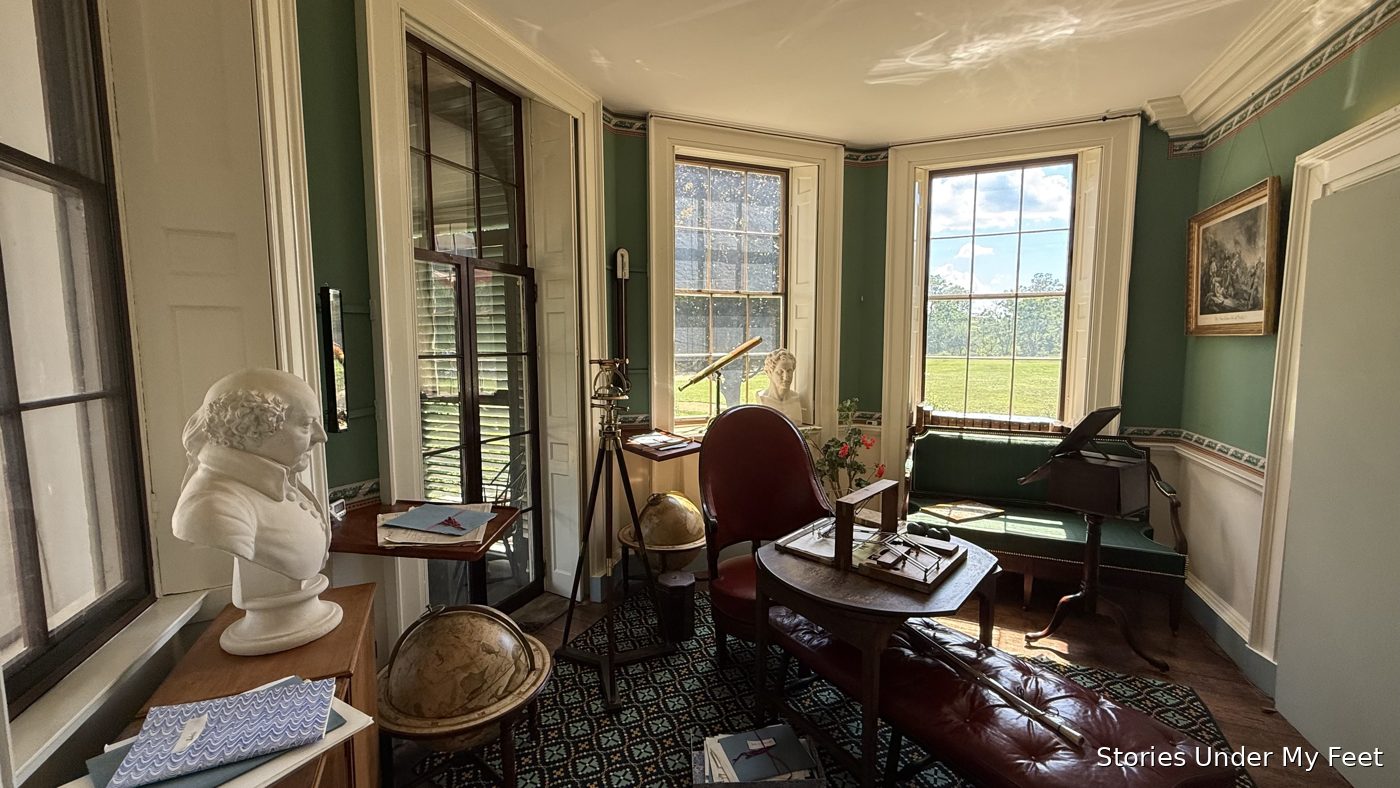
He Was a Self-Learner
And I learned how: he was a self-taught architect. Our guide at Monticello told us his master was Palladio — but here is the beautiful part: Andrea Palladio, the great Italian architect, died in 1580, more than 160 years before Jefferson was even born. Jefferson never met his master, never heard his voice, never sat in his classroom. He learned Palladio's techniques and designs by reading his Four Books of Architecture over and over — he called it his bible — and by standing inside buildings in Europe that carried Palladio's influence. Then Paris raised him to another level. He fell in love with buildings there, especially the Hôtel de Salm, and he worked with a French architect he met there, Charles-Louis Clérisseau, on the design of the Virginia Capitol, modeling it on an ancient Roman temple in Nîmes. A student of a teacher who died two centuries earlier — self-taught, but never done learning. My admiration for him only grew.
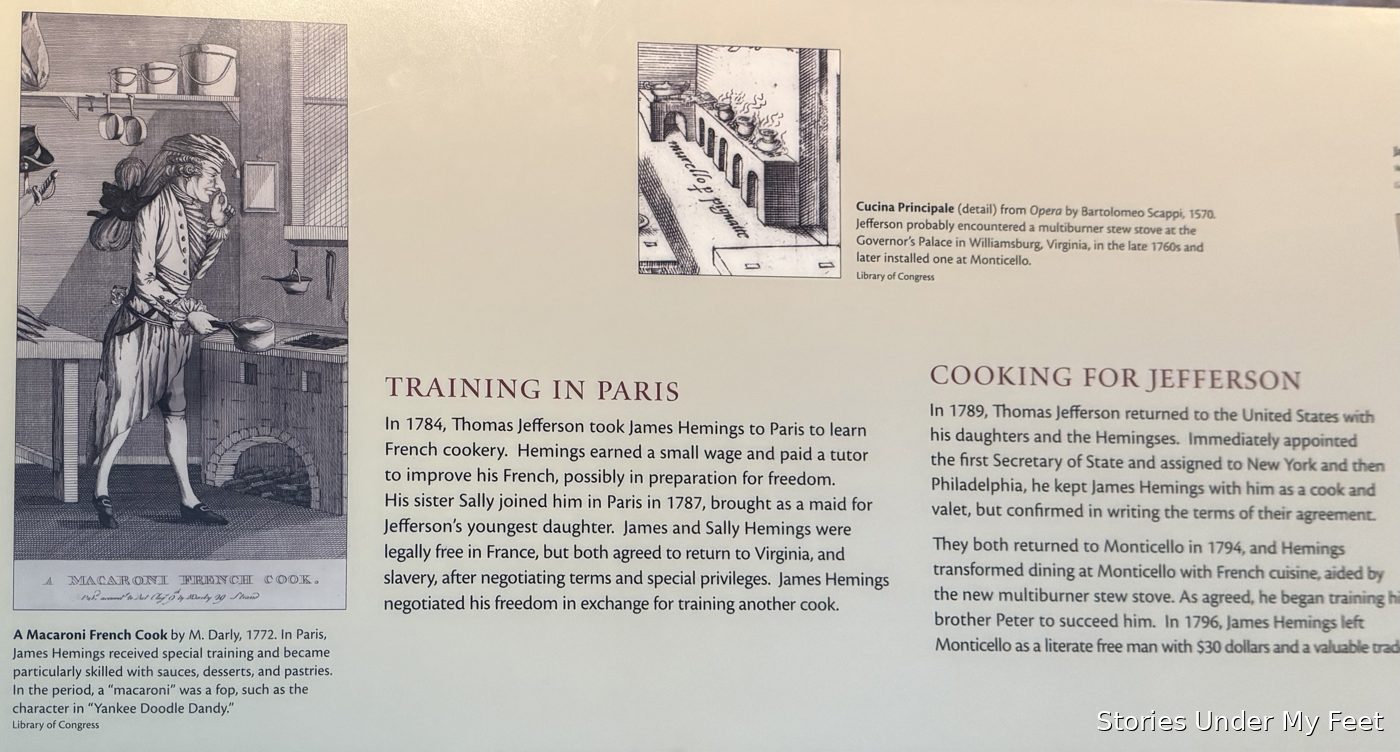
Another Face: The Big Slave Owner
He enslaved more than six hundred people over his lifetime — one of the largest slaveholders among all the Founding Fathers. It confused me and filled me with questions. What did he actually want? Who was the real Thomas Jefferson?
At Monticello I faced another fact. He had children with Sally Hemings, an enslaved woman in his own house, and he never officially acknowledged them as his children. And he never freed Sally herself. In Paris she was actually a free person — French law made her free the moment she stood on French soil — but he persuaded her, a sixteen-year-old, to come back to America and back into slavery, in exchange for promises about her future children.
Two Families on One Mountain
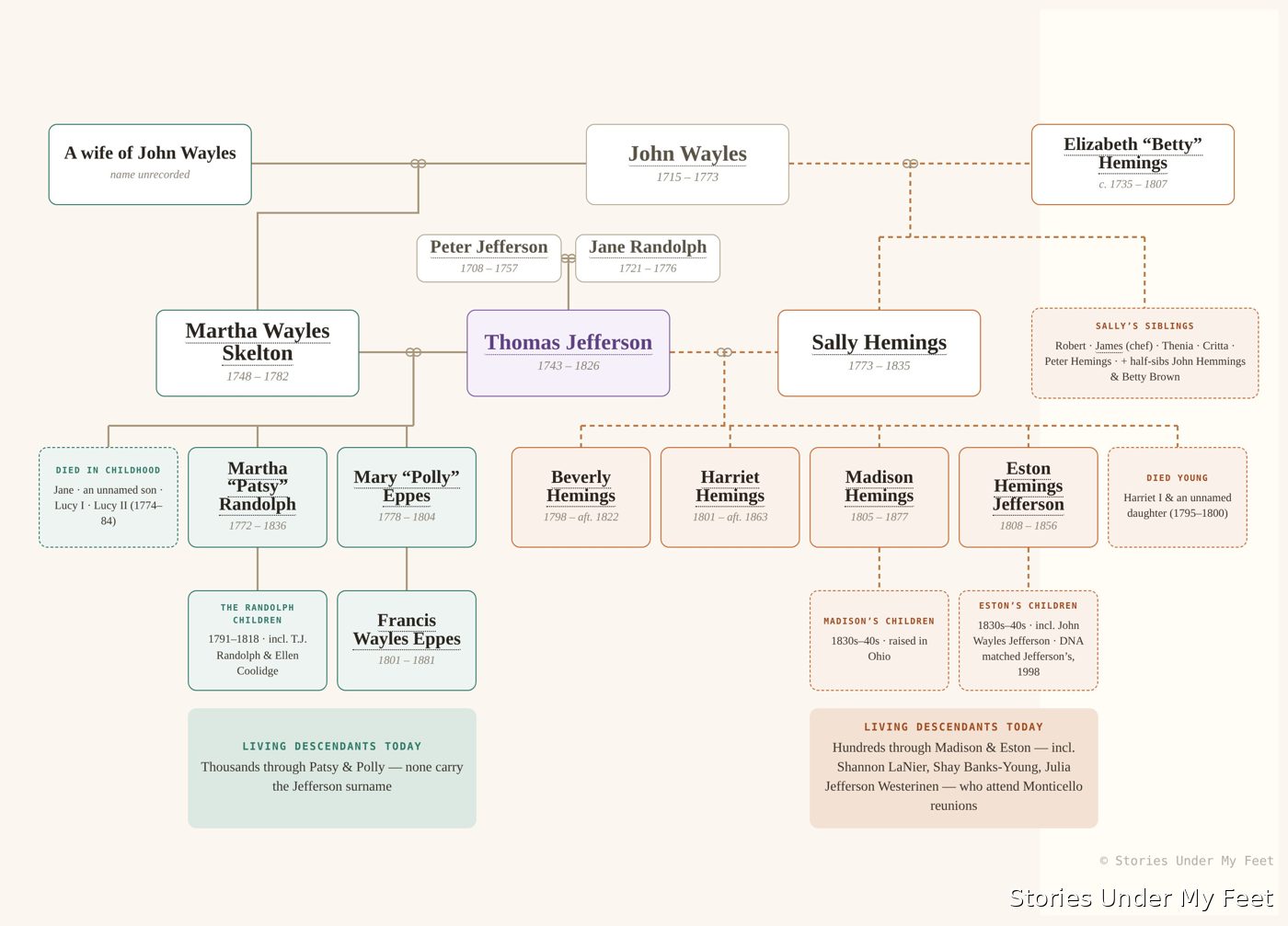
I've been reading a book about the Hemings family — The Hemingses of Monticello by Annette Gordon-Reed — and I learned that of the six hundred people Jefferson owned, he freed only ten — and every one of them was a Hemings. That made me curious about what was really going on there. It must have been such a complicated situation: two families living on one mountain, with the same father's blood running through both. One family was official and white, displayed to the world. The other was mixed-race and enslaved — serving the very family they were related to. Even with the same father, the enslaved children had to wait on their white relatives.
I ended up drawing the whole thing out to make sense of it — the full Jefferson & Hemings family tree.
Four Faces
Somewhere in the middle of the book, my thinking started to change. No one is perfect, and every person has more than one face. Jefferson had at least four. Two public faces: the politician, and the visionary — the architect and founder of a university. And two private faces: the slave owner who fathered children with a woman he owned and never acknowledged them — and the kind, sensitive, entertaining man who turned his entrance hall into a little museum so his guests could learn something while they waited, and who was so devastated when he lost his father, his wife, and his children that for a while he could barely function at all.
I laid all four out across his life here: Thomas Jefferson — Four Faces of One Life.
What I Take Home
So I changed my mind — not about the facts, but about how to hold them. Historical figures are still people, and people are never as simple as one plus one equals two. Every human has multiple faces, multiple thoughts, and those thoughts change over time. There is no simple conclusion, because that is what a human being is: a complicated creature. That gray area between his curiosity and his flaws is exactly what fascinates me.
Standing there, I suddenly remembered a song — "Salaryman" by Kiyoshiro Imawano. He sang that "if you're not a child, anyone has two or more faces (子供じゃなけりゃ誰でも 二つ以上の顔を持ってる)" — Jefferson was an adult human too. This trip was a great one. It gave me the chance to think about what humanity really is.
Three pieces I put together
- Thomas Jefferson — Four Faces of One Life — What the real Thomas Jefferson was actually like.
- Who Was Sally Hemings? — The enslaved woman who lived with Thomas Jefferson.
- Jefferson & Hemings — Untangling the complicated family tree.
Books & media
- Thomas Jefferson: The Art of Power
 Thomas Jefferson: The Art of Power — Jon Meacham · Buy on Amazon
 - The Hemingses of Monticello: An American Family
 The Hemingses of Monticello: An American Family — Annette Gordon-Reed · Buy on Amazon
 - The Four Books of Architecture
 The Four Books of Architecture — Andrea Palladio · Buy on Amazon
As an Amazon Associate, I earn from qualifying purchases.