Acadia National Park
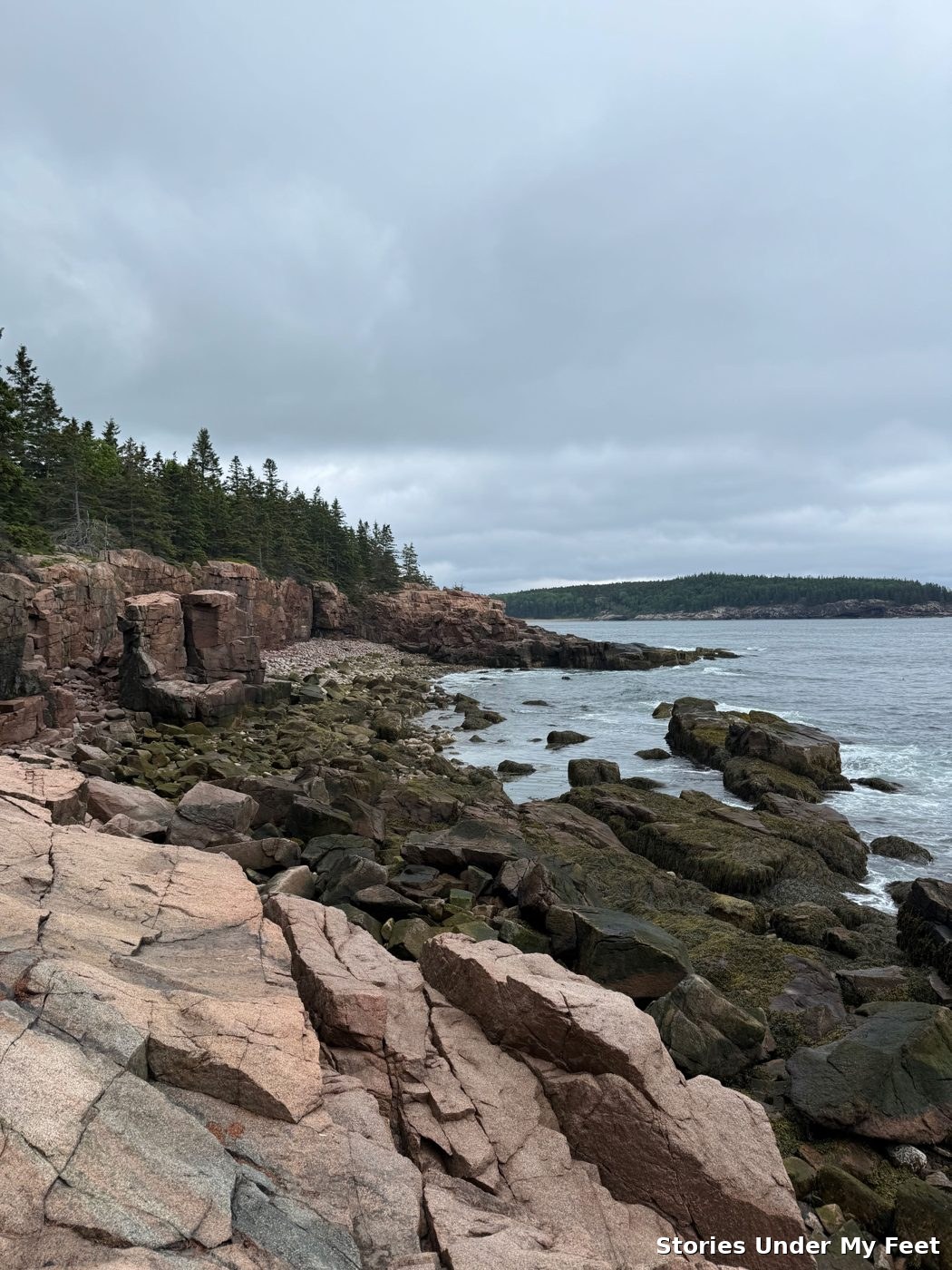
The end of the Maine leg, on Mount Desert Island — and the reason I came all this way: Acadia National Park.
Acadia National Park — Wasn't as big as I expected — one of the smallest national parks (about 47,000 acres), and a strange one in the best way: it was assembled from donated private land, which is why the park roads keep running right between people's houses like ordinary local streets, then suddenly open onto pink granite and ocean.
A note on the visitor centers, because it tripped me up: the "gateway" center you hit first has no real exhibits — it's mostly a gift shop and info desk. The actual main center is Hulls Cove, which was busier and where the real orientation happens. Go there first. (And yes — I got my national park passport stamp; I'd been collecting them the whole trip, which is half the reason I keep wandering into every visitor center.)
Jordan Pond House — Signature popovers with tea, served here since around 1895. They were tasty — but honestly, what I kept thinking about was the marketing: the popover isn't some rare regional dish, it's a simple hot roll. The magic is entirely that nowhere else in the park serves them, so a plain popover with a pond-and-mountain view becomes a bucket-list thing. A whole institution built on scarcity and a good view. I respect it.
Bass Harbor Head Light — This one I have to correct, because everyone assumes "red light = colored bulb." For most of its life the lamp was a plain white light, and its red glow came from a physical red glass shroud fitted over the lens — a real piece of colored glass, not a red bulb. Only after the National Park Service took over in 2020 did it switch to a red LED. So the color you see today is electronic; for over 150 years it was literally light shining through red glass.
Robbins Motel — Camping was booked and hotels were $250+, so I found this motel on what I nicknamed "lobster road." Learned Maine produces more like 78–83% of the U.S. lobster catch, not the 95%+ I'd assumed.